

Introduction
This Sketch continues the history of Casterton’s Village Hall.
As noted in my first Sketch about the Hall which examined the history of the Hall from 1910 to 1969, in November 2023, I was handed a battered small suitcase which was filled with documents relating to the history of the Casterton Village Hall. It had been passed on from Secretary to Secretary until being deposited in the cellar of the Hall.
I thank the Casterton Village Hall Committee for lending me these documents. Details about the current Hall activities can be found here https://www.castertonparishcouncil.org.uk/casterton-village-hall/ .
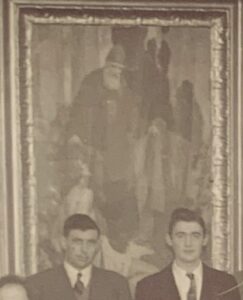
The first Sketch, which can be viewed here https://www.castertonparishcouncil.org.uk/a-sketch-of-casterton-village-hall-from-1910-to-1969/ , discussed the years before the hall was built, who the land originally belonged to, who contributed towards the building of the Hall, the building of the Hall, how the Hall was used and how the Hall was administered. It documented the ongoing funding and the conflicts that arose, and as shown below, continued to arise in the constitutional structure of the Hall and its committees. The first Sketch left one item hanging (pun intended), the fate of the old picture with the battered frame. As noted below, this was finally resolved, 14 years after it first became an item on the agenda.
Notes on References to the Hall and Abbreviations Used
Throughout the narrative I will refer to the building as either ‘the Hall,’ ‘the Room,’ ‘the Village Hall’ or ‘the Church Room’. They are the same thing and were used interchangeably in this way during the period that this Sketch covers.
There are several organisations referred to below. The first mention of the organisation will be referred to with its full title followed by the abbreviation used in the text thereafter. If the organisation is included within a quote, it will be referred to as it was in the quote. For ease of reference, I have included these abbreviations in an Appendix.
The Next Chapter
As noted at the end of the first Sketch, some 57 years after the Hall had opened it was still going – but not strongly. There was an existential threat from the loss of income and the lack of formal committee meetings to plan how to overcome the threats to the existence of the Hall. The first meeting in 1970 reported that more funds were transferred from the savings account to the current account.
1970 – Cost Concerns
An Annual General Meeting (AGM) was held in the Church Room on 29 September 1970. In the Chair was the Reverend John Price Evans. Also attending were Mrs Cowin, Miss Smith, Mr Goad and Mr Paterson. The list of apologies was longer, there was Mrs Crossley, Mrs Luxton, Miss Makinson, Miss Willson, Mr Hodge, and Mr Mellor.
At the meeting, the Treasurer expressed concerns about the lower income and the increased running costs. This required yet another £20 to be transferred from the deposit account to the current account. The deposit account balance now stood at £179, helped by a donation from the Rifle Club of more than £8.
The AGM concluded with it being noted that Miss Makinson and Mr Hodge had resigned from the Committee. The remaining committee members were elected en-bloc, with the power to co-opt members. They would certainly need more help.
1971 – Cleaning Concerns
The next recorded meeting in the minute book was 6 months later, on 22 March 1971. The Treasurer reported that it had been necessary to transfer a further £20 from the deposit to the current account. The Casterton School Guides had been using the room which had helped generate some income.
A concern was raised about the state of the room, it needed a good clean. It was agreed to contact Mr Nelson ‘about the damp patch over the kitchen door’ and broken windows needed mending.
A coffee morning was arranged for early June to raise money for the renovation fund. It raised, in the new decimal currency, £16.92.
The canteen cupboard which had previously been used by the County School Meals service was no longer required. The Women’s Institute (WI) agreed to pay fifty pence a year to rent it.
Finally, the following people were co-opted onto the Committee, Mr O Benson, Mrs H Hird and Mrs E Makinson.
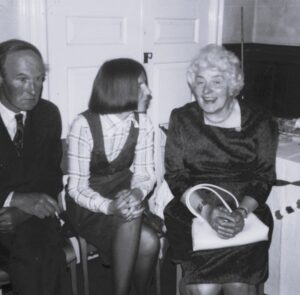
From left to right, William ‘Billy’ Makinson, Mrs Llinares and Elsie Makinson C1977. Courtesy of Jean Hamlett
The next meeting was held in late November, followed by the AGM. The finances were reported as stable with the deposit account being £189.
It was reported that Bridge Classes being held in the Hall on Tuesday evenings.
It was agreed that the rate that the WI were paying for the room was too low and that it should be increased to 50p per hour.
Cowan Bridge Joiner -Mr Huggonson- was once again asked to quote for repairing the gates.
1972 – Infrequent Meetings
Another meeting was not recorded until the one held on 16 October 1972, 11 months after the previous meeting. The minutes noted that the gates had been repaired. The regular users of the room now consisted of the Girl Guides, the Youth Club, and the WI.
The Treasurer reported that the deposit account balance was £194 but further expenses necessitated a further £20 transfer of funds to the current account. He also noted that the Hall had been operating at a loss over the last few years. The issue of fund raising was raised and a meeting was arranged for the following week to discuss the matter.
At that meeting, it was agreed to hold a coffee morning and stalls to be held in March. Entrance would be 10p with Mr Paterson on the door. There would be a Bring & Buy Stall run by Mr Mellor, a raffle run by Mr Blaylock with tickets priced at 2p. Mrs Makinson would provide milk, Mrs Crossley coffee, Mrs Cowin sugar and home-made biscuits courtesy of Mrs Luxton, Mrs Cowin, and the Secretary.
1973 – Limited Activities
The next meeting was held in April 1973, after the coffee morning which had realised over £36, lifting the deposit account to £213.
Discussion was held about applying for a County Council Grant offered to voluntary organisations. The purpose of the grant would be to obtain funds to decorate the inside and outside of the Hall. T W Dennison would be approached to tender for the work, his price being used for the grant application. There appeared to be no AGM held in 1973.
1974 – A Change in Structure
The next meeting was held at the Vicarage on 7 February 1974. The Treasurer had reported that the deposit account was £210 but once again warned that the Hall’s income no longer covered expenses.
A letter had been received from the County Council offering a grant of £150 towards the decoration of the Hall. Mr T W Dennison confirmed that the price of his original tender, £325, had not changed. It was agreed to ‘send a letter around the village appealing for contributions towards the balance of £175.’
The WI had kindly agreed to wash the Hall’s curtains.
A second meeting in 1974 was held at the Vicarage on 16 December. In addition to committee members, also present was Mrs Mellor representing the Parish Council (PC).
The Hall had been decorated by T W Dennison and in addition to the quote, he had cleaned and varnished the dado rail. The Casterton community had generously contributed £136 towards the costs of decoration.
It was noted that Mr Fabian had been asked to replace some of the windowpanes but as these were the ‘bulls eye type in the door + leaded panes it was likely to prove costly.’
Despite the generosity of the Village, the funding crisis was coming to a head. It was noted that the regular annual income of the Hall was only £30 but that it cost at least £110 to keep it running. Adding to the issue was that the long serving Treasurer had resigned after 17 years of service.
A further complication in the future of the room was ‘the impending change in the status of the parish of Casterton…’ The Parish of Casterton and its resident Vicar were being subsumed into what would become the Rainbow Parish, centred on Kirkby Lonsdale. The issue arising from this forthcoming change was that the Deeds relating to the administration of the Hall gave all the powers to the incumbent Casterton Vicar. As there would no longer be a Vicar, a variation to the Deed was required.
After a lengthy discussion about the situation, the following points emerged about what options were open the Church Room Management Committee (CRMC). (The CRMC had been running the Village Hall for the benefit of Villagers for many years.) The minuted possible actions were:
‘1) A holding committee should be elected to run the room during the interval between the departure of the Chairman [the Reverend Evans] + the reorganisation of the K. Lonsdale parish. A caretaker, or person responsible for heating the room would be needed, as well as a mandate for signing of cheques.
2) The transference of the contract of the Room to a Village Committee could involve lengthy legal transactions + would only be a viable proposition if a grant could be obtained from the County Council or some other source.
3) The Room could be handed to the Casterton School reserving certain nights for the village use.
4) The keys could be handed to the Vicar of Kirkby Lonsdale + arrangements be left entirely to him.
5) Appreciation of the work of the Chairman in cleaning + heating the Room was expressed.
6) The Archdeacon would be meeting the P.C.C. [Casterton Parish Council] on the following evening + the problem should be discussed with him. (I think that this was the previous Casterton Vicar, Archdeacon Walter Frederick Ewbank).
7) A General Open Meeting is to be held on Monday, January 6th [1975] notice to be given in the Newsletter.’
Background to the Reorganisation of the Parishes
Even as far back as the 1960s, with falling congregations and there being fewer Vicars available to administer to their flocks, the Church of England needed to reorganise how it cared for its more remote parishes.[1]
In 1964, the Bishop of Carlisle decided that Kirkby Lonsdale and its surrounding parishes were suitable to try out the new idea of having a team ministry rather than a single Vicar in a single parish. The original plan was to have a Rector and a team of two Vicars, one living in Barbon and the other with special responsibility for Schools. It was planned that Casterton School would appoint its own Chaplain and have use of the church in Casterton as its school chapel, while the churches at Barbon, Hutton Roof, Lupton, and Middleton would revert to their pre 1860 status of chapels of ease in the enlarged Parish of Kirkby Lonsdale. The Rector would be incumbent at St Mary’s.
The vicars of Barbon and Casterton both refused to resign, thus delaying the implementation of the scheme. Both Casterton School and the parishioners of Casterton objected to the transfer of the church to the school.
After several years of delay, the Bishop of Carlisle appointed the Rural Dean of Penrith, Canon John M How to St Marys to try to rectify the situation. A public meeting was called to discuss modifications to the scheme for a team ministry. Canon How recalled that ‘The Archdeacon said that it was up to the meeting to accept or reject the scheme: he would put no pressure on them, but there was no alternative! With great reluctance and nobody speaking in favour, the scheme was accepted and the gathering was astonished when the prospective rector, being asked to speak, expressed his eager anticipation of the task that lay before him.’
Canon How embarked on his task, working through the issues with the various parishes. In time he won them around to the idea of a team ministry. In time, the Vicars of Barbon and Casterton agreed to resign, and an Order in Council was made uniting the seven parishes into one, providing for a team Rector and a team Vicar, both living in Kirkby Lonsdale. The costs were shared between the Parochial Church Council and the seven District Church Councils.
1975 – A Holding Committee is Formed
The first meeting of 1975 was held in the Church Room on the festival of the Epiphany, the day when three ‘wise men’ visited Jesus. The Reverend J P Evans was in the Chair and explained that the purpose of the meeting was to form a ‘Holding Committee’ to run the affairs of the Room until a decision had been made about its future.
He noted that ‘According to the Deeds [,] control of the Room was vested in the Vicar of Casterton or his officer. The Diocesan Board of Finance [DBOF] hold in trust £300, which was donated by the Founder of the Room [Bickersteth], this produced an income of around £12 p.a.’[2]
A Holding Committee was duly elected. Mr O Benson was elected Chairman, with Mr W Makinson as Vice Chairman. Mr T W Goad was elected as Treasurer while the Secretary was Miss M M Wright. In addition, new members were elected to the committee, Mr A None, Mr A Goad, Mr N Briggs, Mr E McL Begg.
The retiring Treasurer, Mr A D Paterson, reported that the current account was less than £50 and that the deposit account stood at £148.50. He told the new Holding Committee that the largest expenses were the gas, electric and water bills.
The new Holding Committee with renewed energy and impetus started to hold regular meetings, taking on the challenge of revitalising the fortunes of the Hall.
The ‘Other Business’ section of the first minutes of the Holding Committee reported mundane matters such as installing a switch in the kitchen to save going into the cellar and that the water pressure on the tap was low, but also addressed more weighty issues.
It was proposed that the possibility of purchasing the room should be investigated, but it was felt that the DBOF would be unlikely to sell the Hall for a nominal fee, and that the legal practicalities could be complicated.
The future use of the Room was also questioned. The original deeds had placed stipulations on what the room could be used for, effectively banning secular activities.[3] It was noted that some potential hirers had been refused and it was ‘generally agreed that more use could be made of the Room.’ It was also observed that the fees for hiring the room had not been reviewed recently and that this should be a task for the new Committee.
The Picture once again became a topic of discussion. It had not been rehung after decoration of the Hall and some of those present had queried whether its religious theme was appropriate for a Village Hall ‘in this day + age + Miss Bickersteth’s views were sought. She suggested that it might be sold or given to the Church. She also added that restrictions on the use of the Room might be relaxed.’
A Flurry of Activity
The next meeting was held one month later 4 February 1975 with a wide-ranging agenda.
It was agreed that because the leaking chimney was no longer used it should be removed. Mr J Nelson would be asked to quote for the work. Meanwhile, Mr J Tomlinson would be asked to quote for replacing windowpanes and for fitting a new Yale lock. The younger members of the Committee had agreed to erect a fence around the top of the steps to the stoke hole.
It was agreed to send a letter to the retiring Treasurer Mr Paterson, thanking him for his services.
It was noted that the Parochial Church Council had accepted the gift of the picture.
Room hire charges, which had not been updated since 1969 were raised to £2 for 3 hours and £1 for each hour thereafter.
A letter had been received from Cumbria County Council offering advice about forming a Village Hall Committee.
A letter had been received from the Diocesan Registrar acknowledging the Holding Committee’s request for the transference of the Room to a Village Committee. They had advised that the matter would be reviewed at the next meeting of the DBOF’s Trust Committee. It was suggested that the Holding Committee should write to the DBOF to advise them that it would be reviewing its position at the end of the three months.
Finally, the younger members of the Committee wanted to organise and run a Dance in the Hall at the end of February subject to the granting of a licence and there being no objection from the Reverend Canon John M How. (Canon How was Rector of St Marys in Kirkby Lonsdale from 1973 to 1981.)
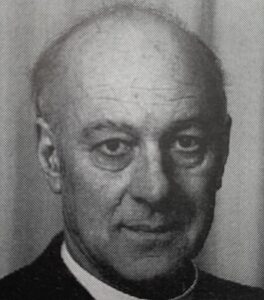
The Reverend Canon John M How
The dance would likely have been the first such secular event organised at the Hall, highlighting its change of status within the community from serving the religious needs of the village to more social events. It was also agreed to arrange another social gathering with a bring and buy stall in mid March, at which Mr Mellor would arrange to show a film.
Further Progress
In quick time, another meeting was held in the Church Room on 4 March. The minutes reported on various outstanding maintenance matters such as the chimney, windowpanes and locks all requiring attention.
The disco had produced a profit of more than £22 which ‘was considered most satisfactory’, despite one pane of glass having been broken and an arm broken off the toilet. However, the Headmaster of Casterton had also raised a complaint, the nature of which was not minuted, and so the question of arranging another disco was deferred.
A different social evening was however agreed. Admission would be 25p, with Mr Goad asked to produce posters. Mr Blaylock would man the doors, while a grocery box for the raffle would be arranged by Mr Makinson. Mr Mellor oversaw entertainment including a tombola stall. It was agreed that tablecloths would be borrowed from the WI and a dartboard from the Men’s Club.
Frustration
The 14 May meeting was told that the lock was now repaired and that the chimney, which was no longer being used, was causing a damp patch in the room. The social meeting had been a considerable success raising £40.
Frustratingly, no reply had been received from the DBOF’s Registrar regarding the status of the Room. The Secretary was asked to write to them yet again to express the Holding Committee’s dissatisfaction. Canon How and the Archdeacon of Westmorland and Furness, the very Reverend W F Ewbank, were copied in.
The next event to be planned was a motor rally organised by Mr Llinares and A Makinson. A car treasure hunt was discussed which would be followed by a social event, a supper, in the Hall. Details would be agreed at the next meeting.
Progress?
Canon How was in the chair for the June meeting. The Reverend Ewbank reported that the Carlisle Diocesan Trust Committee had asked to meet the Holding Committee to discuss several recommendations for how the Room might be used in the future. These were summarised as.
- a) if there was sufficient support from the community both financially and actively and there was an identified need, the DBOF would take steps to change the status of the Room from the Parish to that of a Village Hall. It was recorded that this could take some time and therefore the Holding Committee would need to continue.
- b) another option was that the Room could be converted into a small house to be let to a young married couple. The house would be under local control. This idea was rejected by the Committee because there was no other public space to meet in the village. Canon How agreed with the Committee’s thoughts.
- c) The Committee felt that even though, at that time the only regular users of the room were the WI, the Girl Guides and the PC, there were hopes of restarting the Men’s Club and of holding evening classes. It welcomed the opportunity to help strengthen community life, especially ‘now that in recent years the pattern of population had changed. There is a considerable number of young people and the children should be catered for.’
In other business, it was agreed that the motor rally would go ahead, and concerns remained over the safety of the gas water heater. It was also noted that the piano tuner had advised that it was not worth having it repaired. Mrs Hird said that she had one which might be considered as a replacement.
Keeping it Going
The September meeting agreed that a quote should be obtained to dismantle the chimney and that the water heater had been repaired. Nothing further had been heard from the DBOF, the motor rally had been a success with £1.48 being handed to the Treasurer. Mr Blaylock was tasked with following up the offer of the piano.
Due to the low attendance at the meeting by committee members, discussion of the winter programme was held over until the next meeting. Finally, the Picture once again was discussed. Mr Benson was asked to contact Mr J. Thompson, the local auctioneer, to value it.
The October meeting was also the AGM. The Chairman explained that the present committee was a Holding Committee and he felt that the current status should be reviewed. In very forthright language, he added that ‘the dilatory attitude of the Diocesan Committee was deplored.’
The Finances were reported to be in a reasonable state, but it was observed (once again) that the revenue from rents did not cover the running expenses. Reservations were expressed about organising fund raising activities until the status of the Room was decided upon.
The Officers and Committee were then elected. It was noted that Mr A Goad, Mr N Briggs, and Mrs Cowin had left the village and so had stood down from the Committee. Fortunately, there were new members willing to join, Mr Llinares, Mr Wilman, Mrs Penny, and Mrs None.
Programme Planning
The winter programme was agreed. There would be a disco, an ‘Old Tyme Dance,’ a cake icing demonstration, a film and social evening and a whist and domino drive.
With such an ambitious programme to arrange, two meetings were held in November. Mrs Eglin was coopted onto the Committee. The fate of the chimney remained unresolved, but it was agreed to get rid of the old piano and replace it with the one offered by Mrs Hird.
Mr Thompson had valued the Picture, and it was agreed that it should be entered into a public auction with a suitable reserve. A decision about whether it was necessary to obtain permission to sell the picture should be obtained from the Church Commissioners was postponed.
Mr None was tasked with organising the Disco but Mrs Penny, the Headmaster’s wife, requested that it be held during the spring half term. It was agreed that the ‘old time dance’ would take place early in the New Year and that Mr Wilman would ask Mr Packham about securing a band. The cake icing demonstration was scheduled for early December, with sixty tickets being made available at 25p each. Mr Mellor was to be approached about securing a film for the film and social evening.
Discussion about the whist drive was deferred, but it was noted that Mrs Makinson would organise a trip to the pantomime at the Winter Gardens in Morecambe on 2 January. The cost of the coach was £16. It was also proposed that Mr None might arrange a visit to a cabaret evening at the Inn on the Bay in Morecambe although concerns were expressed that it might be too expensive.
In ‘Other Business’ suggestions about starting a Saturday Morning Club for children and a Sunday School were mooted but held over until the next meeting.
1976 – Regular Meetings
Six meetings were held during the year, often covering the same topics. The years’ activities are summarised below.
The Picture
The first meeting of the year was held in mid January. At the meeting it was decided that the painting be put up for auction at the next appropriate sale and that the reserve should be £230. At the following meeting, it was agreed to accept the advice given by Mr Thompson that the painting should be offered for sale with a reserve of £200.
The April meeting heard that the Picture had only received a maximum bid of £140. It was resolved to keep hold of it for the time being in the hope that its value might increase.
Programme of Events
The social event took place on 17 February and included a raffle, tombola, film, and a game made by Mr Llinares who was a talented carpenter. Unfortunately, there had been a problem during the evening – the electricity had failed – which meant that the film had to be shown on the following evening.
The cake icing demonstration had been a success raising £13.26. The trip to the pantomime had raised a profit of £4 but the trip to the Inn on the Bay was postponed until later in the year.
There was more discussion about the Saturday Morning Club. It was proposed that it should be held every two weeks, and that each child would be charged 10p. The plans progressed through the year. Mr None had established that about thirty children were interested in attending. He told the Committee that he had a record player on loan from the Kirkby Lonsdale Youth Club which required repairing. Mr Llinares advised that he also had access to one. It was suggested that £10 be made available to acquire items such as table tennis balls and bats, paints and crayons and a football.
The Saturday Club met for the first time on 27 March with twenty children attending. Activities included table tennis, table football and origami! Mr A None had been supported by a good team of volunteers and was congratulated on his success.
The suggestion of holding a village concert later in the year was thought to be a promising idea but eventually ended up being a coffee evening with entertainment provided by Mrs Makinson and Miss Wright.
The Sunday School was recommended to be a fortnightly event. Mrs Eglin, Mrs A None and Mrs Hird would help run it. The August meeting reported that the Sunday School had been active but had not been using the Hall.
During the year thoughts turned to the forthcoming Queen’s Silver Jubilee in 1977 and the need to establish a Celebration Committee. This was the last time the Jubilee was mentioned in the minutes.
Status of the Room
Limited progress was made regarding the status of the Room. The DBOF had sent two letters. The first letter suggested a twenty-one-year lease by the DBOF Trust to local Trustees, the second suggested an alternative solution might be to appoint the PC as Trustees. The PC were reluctant to become Trustees and the Management Committee agreed to reply by stating that it is ‘reluctant to accept any other terms than freehold.’
By the August meeting there had been no response from the DBOF, and a copy of the April letter was sent to the Bishop, Archdeacon Ewbank and Canon How.
At the AGM in November there was an update about the status of the Room. A draft proposal had been received from the solicitors acting for the DBOF.
The main points were that new Trustees should be appointed, a rent would need to be agreed, the new Trustees would be responsible for all finances and conduct of the room supported by a Committee. The lease would last for 21 years.
Mr Robin Breay attended the meeting as ‘honorary advisor, and interpreter.’ After extended discussions, the Committee agreed that they were disappointed by the limited terms of the draft proposal. One issue was that a twenty-one-year rent was not long enough to qualify for local or national grants.
The Committee stated that ‘It had always been understood that the Room had been given to the Parish of Casterton, with the Vicar in charge and the Diocesan Authorities as Trustees – how could the Authorities as Trustees propose to charge rent for, or offer to sell property which belonged to us already?’
It was thought that should the DBOF decide to sell the Room, under the terms of the original deeds, the proceeds of the sale could be used for no other purpose than a Casterton Public Hall.
Discussions were then held about what the next steps were. It was finally agreed that Mr Breay write to Mr Hawks (presumably from the DBOF) demanding that the Room be conveyed to the Village for its own use.
Gas Bill
An exceptionally large quarterly gas bill had been received amounting to £162.09 about ten times what would be expected. Mr Benson was charged with sorting it out with the gas board. It turned out that a new meter had been installed and the reading was incorrect. The revised bill was a more acceptable £16.
Room Charges
It was proposed by Mr Mellor that if the room charges were reduced, more people might use it. The present charges were recorded as £3 for the first two hours and £1 per hour thereafter. It was agreed to keep the charges the same during the winter but to reduce the first two hours charge to £1.50 over the summer.
Committee Members
The old Treasurer, Mr O G Wright, had left the district and so Mr A None was elected.
There had been some confusion over a Hall booking. It was decided that the Treasurer would now take all bookings and a list of Committee Members be passed onto Mrs Hazlett so that she knew who had authority to issue the key to.
Maintenance
Early in the year, concern was expressed over the safety of the power plug which was being run from the lighting circuit. The issue was still being raised at the October meeting, as was the leak in one of the radiators which had been reported earlier in the year.
Meanwhile the women on the Committee were asked to consider a ‘Boon Day’ for cleaning the Room. The Saturday Club had made a start on cleaning the kitchen, and the members of the Management Committee were to meet one evening to scrub the floors.
During the year it was reported that there had been a break in in the Hall cellar and the Police were called to investigate. The burglars had broken the window to open the door.
1977 – More Meetings
The Status of the Room
Seven meetings were held in the year with the main topic being the status of the room. Early in the year the issue took a step forward. Attending the January meeting were Canon How and Archdeacon Ewbank. Canon How had wanted to meet the Holding Committee because he felt that there was some misunderstanding over the transfer of the Room to the Village. He went onto address in some detail the concerns of the Committee. He was asked about who owned the room. He stated that ownership was vested in the DBOF as holding Trustees but that they were passive owners and could not act without the permission of the Managing Trustees.
The Committee was asked to convey to the DBOF three points. Firstly, that the rent be nominal, secondly that the lease should be for at least 50 years and thirdly that the Charity Commissioners would have control when the Room was transferred to local trustees.
The Committee reviewed the response at the March meeting and agreed the following amendments to the draft proposal.
- The lease would be for 60 years.
- The rent would be nominal.
- If local interest in the hall waned, control of the Room would revert to the DBOF.
- If this happened and the DBOF decided to sell it, then the proceeds must be applied in accordance with direction from the Charity Commissioners.
- The Bickersteth endowment of the Room could be transferred to local Trustees who have the power to spend both capital and income arising for the benefit of the Church Room.
In August, the Committee had received a revised draft lease which included the terms above as well as empowering the Committee to be able to raise capital for extensions by a mortgage subject to approval by the DBOF.
Four local ‘Holding Trustees’ were appointed, presumably in preparation for the new lease agreement. They were Mr Otty Benson, Mr John Wilman, Mr Billy Makinson and Miss Margaret Wright.[4] Holding Trustees bore no responsibility for the day to day running of the Hall, this was vested in the Management Committee aka Managing Trustees.
In September, Mr T W Goad was asked to take action to finalise the lease.
The Bickersteth Endowment
The old endowment of £325 set up in February 1915 by Mrs Bickersteth was also queried at the January 1977 meeting. The Archdeacon, who was familiar with the background to the endowment stated that there was an argument for transferring the capital but thought it best to wait until a major need arose.
In raising the issue with the DBOF, it transpired that they were not fully conversant with the endowment and therefore investigated it, later communicating that the endowment was now only worth £169.62. This would become an issue for the new regime to try to address in 1978. A letter was written to the DBOF in November of that year by the new Secretary asking why the capital was no longer £325.
Heating Woes
The March meeting was held at Old Manor because the heating had failed in the Hall. Aside from the issue of the broken heating, also mentioned was a failed electric pump and a broken gas valve.
A few weeks later progress had been made on the heating, it was now fixed, and a quote had been received to lag the underfloor pipes for £140.
In August, a decision about lagging the underfloor pipes had not been made, this despite the Treasurer’s report that the largest expense each year was for heating the room. Mr Wilman proposed that there should be a study to understand how much it was reasonable to spend heating the room and to take this into account when setting the room rent rates.
At the September meeting, the heating of the room was still considered erratic, and Mr Benson was asked to raise this with the Gas Board.
There were more heating woes later in the year leading to a complaint from the WI. There had been no heat available for their November meeting due to the strikes by the electrical workers which exacerbated the general unreliability of the system. It was agreed that once the strike was over, the timer clocks could be reset and that there would be further consideration by the Committee about the heating.
A New Customer
In the summer, a letter had been received from the Director of Education enquiring about the possibility that they could rent the Room for a nursery group for a half or full day from September. The Secretary was tasked with telephoning the Director to agree and let them know that the rental would be £4 for half a day or £6 for a full day.
There was good news at the September meeting when the County Education Committee indicated that they would hire the room for one or two mornings a week, subject to approval by the Fire Safety Officer.
The Fire Officer inspected the building in October and recommended that a Yale Lock should be fitted to the back door. A new lock was bought, and Mr Llinares offered to fit it. The Fire Officer also recommended fitting illuminated exit signs and a light outside the back door.
Events During the Year
It was agreed to organise the following events for the winter programme; a coffee evening and entertainment, a family dance, a young person’s disco, a film show, and a Twelfth Night Christmas social.
A visit to the Room by the Duke’s Playhouse was arranged for 31 October. The Playhouse had paid a rent of £5 to perform ‘These Good Old Days’. The event was reported later to have been ‘an interesting, entertaining and instructive evening.’ It was agreed to book the Players again for a return in the spring.
The AGM had been scheduled for mid November but due to the absence of the Treasurer and the general poor attendance it was put back until the following January when it was hoped that the new constitution would be in force.
In October it was reported that the family dance had been a happy and successful event raising £34.53 from the door and refreshments. The coffee evening and entertainment had also gone ahead, raising £28.75.
In December, thoughts had turned to the proposed visit by Dukes Playhouse in the spring. It was felt that they should pay more than their proposed offer of 25% of door takings given that for the previous event, the Committee had worked hard at promoting it and selling tickets.
It was felt that there was too little time to organise The Twelfth Night social and that a New Year social should be arranged instead, for 14th January from 7:30 to 11:30. Messrs Benson and Makinson would organise the games and dancing while the ladies of the Committee would serve tea, and sell coke and crisps. All this for 30p per ticket.
The Picture
The Picture raised its head again. Mr Llinares was tasked with asking Mr Payne to look at the picture with a view to selling it. Mr Payne had suggested that Mr Henry Bowring, who was the local representative of Christies, could be asked for advice. In October, the Committee were advised by Mr Bowring that the picture was worth between £400 to £600 and that it should be put into a specialist sale in London.
Cleaning
It was agreed that the Committee would meet in September to sweep down the walls and ceiling and that the lady members will ‘scrub out’ a few days later.
An Unfortunate Accident
A Special Meeting was held in late October because there had been ‘an accident to the central heating.’
Turning to the reason the meeting had been called, Canon How explained that after the cellar had been flooded following heavy rain, the heating had been put out of action. There had been several break ins to the Room, probably boys who wanted to play billiards. Robinson Electricians and the Gas Board had attended to repair it. The electrical work was completed but the Gas Board had left the job incomplete, leaving a note on the boiler and informing Mr Benson that the heating system should not be used.
It appeared that the message never got to Mr Benson, in the meantime the Treasurer, Mr None had attempted to light the boiler and there had been an explosion. Fortunately, he was not physically injured but ‘was very shocked.’
The Committee raised several questions, such as why was the cellar door left unlocked? To which the answer was that vandals had broken the windows. It was also noted that the door key was missing and so the Gas Board had been given permission to saw off the lock to gain access.
It was suggested that the gas had been turned off and that the explosion was due to either a residue of gas or an electrical explosion. It was agreed to hold an enquiry to establish the facts and to establish the extent of the damage to the heater and to inform the Insurance company.
The November meeting was presented with a typewritten report summarising the findings of the enquiry (see below). Because they were directly involved in the events, Mr Benson and Mr None left the meeting while the report was considered.

The Committee concluded that ‘the accident had been most unfortunate and whilst they regretted that the incident had occurred were glad that no personal injuries had resulted.’ It was also agreed that a substantial lock should be fitted to the door and that only one person should have the responsibility to turn on the heating.
The Saturday Club Folds
Mrs None reported to the meeting that the Saturday Club had folded due to lack of support. It was noted that the Disco equipment which had been bought using the proceeds from a Carol Singing effort by the Committee, and therefore ownership should revert to the Committee.
It was observed that the Treasurer, Mr A None, was once again unable to attend the meeting and that the Secretary should arrange a meeting as soon as the Treasurer was able to do so. It was further noted that ‘the present uncertain situation could not continue’ and that the Treasurer ‘has intimated his wish to resign owing to pressures of work + studies.’
Three events from this year were related, and the repercussions were felt in the following year. It seems that Mr and Mrs None had fallen out with the Committee over the accident and the conclusions about it reached by the Committee from their enquiries. This together with, in the eyes of the Committee, unauthorised sale of Village Hall equipment and the Treasurer’s tardiness in preparing the annual accounts led to friction.
Other Matters
Other matters touched on during the year included questions about whether a music license was necessary. Mr Benson agreed to see the local Police Sergeant to discuss the matter. Mr Llinares suggested that the Committee think about collecting newspapers to raise funds. It was noted that the piano needed tuning. During the year, the WI had offered to increase their annual rental payment to £20, an increase of 33%.
1978 – The AGM
The postponed 1977 AGM was finally held on 17 January with Canon How in the Chair. The reason he was in the Chair was to give him the opportunity to explain the delay in the signing of the new Lease and Trust Deed dealing with the transfer of the Room to local trustees. He thought that the delay was expected to be resolved within the month -as it turned out optimistically- and so the question arose did those present at the meeting wish to proceed with the AGM when the new Committee would only serve for a month before a new one was required. It was agreed that the AGM should continue, and that the new Committee would serve until the Trust Deed had been signed and a new Village Hall Committee were elected.
The Secretary reported that the Holding Committee had met eight times since the previous AGM in November 1976 with an average attendance of nine. He observed that ‘it was regrettable that the Villagers who were so generous with funds did not wholeheartedly support the use [of] the Room.’
At the meeting, a new Committee was elected. As previously indicated, the Treasurer and his wife resigned from the Committee. Mrs E Makinson took on the vacant financial role. The other members of the Committee remained with the addition of Mr and Mrs Smith, Mr Hamlett, Mr Alexander, Mr J Makinson and Mrs Begg.
Next on the agenda was the status of the room. Canon How read through the Lease and Trust Deed and the Committee agreed to the following to be inserted into the blank spaces;
- a) the charity to be administered until the first AGM by the Trustees,
- b) the Village Hall Committee should consist of ten elected members, five representative members and not more than five co-opted members and c) the AGM to be held in May each year.
As one lengthy episode, the transfer of the running of the Room to the Village Hall Committee was finally ending, another issue that would run for several years was raising its head.
Saturday Club Funds
Under any other business, Mr None reported that whilst the Saturday Club still exists as a Club, it is not functioning. He told the Committee that the equipment that could not be stored had been sold for about £100 and was in the bank. It was proposed that the money would be spent on a Saturday Club outing in the summer.
The Church Room Committee, still at this point the Holding Committee, expressed concern that the equipment which the Committee had helped buy had been disposed of in this way. It was suggested that the Committee should have been offered the equipment first or that the funds given back to the Village.
It was also noted that no rent had been charged to the Saturday Club by the Village Hall. Mr None replied that because no rent had been paid, no heating had been supplied which had resulted in dwindling numbers. Some members disagreed with this, contending that heating had been supplied.
At this point, the minutes relating to the establishment of the Saturday Club were reviewed. It was established that whereas no clear resolution had been reported, it was noted that Mr None had been asked to keep the Committee informed about the progress of the Saturday Club and it was tacitly understood that the Committee were ultimately responsible.
There was no suggestion that funds had gone missing, the issue was how should those funds be used. There was a suggestion that 50% of the funds should be put aside for the use of a future youth club, but no vote was taken. The issue appears to have been left unresolved at the AGM.
Canon How closed the meeting offering his best wishes for the future of the Room which he thought, should become a valuable centre for the life of the village.
The issue about the Saturday Club funds appears to have taken a disproportionate amount of time. A draft letter was written in February 1978 to A None asking him to reconsider his plan to distribute the Youth Club Funds to ‘disperse amongst a few of the former members of the Club.’ The Committee’s view expressed in the draft letter was that the funds should be used for a purpose as close to the original purpose as possible. In their view, this meant that the money should be spent on something specifically related to the Church Room and for the benefit of Casterton’s inhabitants in general.
The draft of the letter also intimated that Mr None’s response might have been influenced by ‘the recent unfortunate difficulties over the boiler at the Church Room’ but suggested that his complaints should be directed to the Gas Board rather than any particular Committee members. This last point was not included in the actual letter sent on 4 February.
At the next meeting in March the ongoing issue regarding the Saturday Club was discussed. It was reported that the Secretary had written to Mr None suggesting that the money belonging to the now disbanded Saturday Club should be returned to the Church Room Committee. No reply had been received. After some debate it was agreed that the Secretary should contact one of the Education Officers for advice and that a second letter be sent to Mr None if necessary. The Chairman would also consult with the Manager of the Midland Bank to enquire whether the money was banked under a separate account to that of the Church Room Committee.
At the end of March, another meeting was held at Field Edge. The Secretary reported that she had met Mr D Lawson, the Education Youth Officer, and put the facts before him. He had seen Mr None and asked him to reply to the first letter and suggested there be a meeting arranged to discuss the matter. A reply was subsequently received from A None and Mrs B Stone. The letter dated 23 March, expressed strong exception to the Committee’s line of thinking regarding the funds but agreed to attend ‘at a public meeting of the Church Room Committee, Youth Club members, Parents and South Lakeland Youth Organisation officials to look into your claims and allegations… [and]… take a look at how the monies can be distributed.’
The letter proposed that the Secretary arrange a meeting of the CRMC in May with Canon How in the Chair and the Saturday Club Members and parents as well as representatives of the Community Youth Organisation in attendance. The minutes did not record whether this was agreed or not, but the archives show that a letter was written to Mr None and Mrs Stone proposing that the meeting be held on 10 May in the Church Room with Canon How in the Chair.
The unsettling issue regarding the funds of the Saturday Club remained unresolved as the transition of power took place. Nothing about the issue was mentioned in the first AGM minutes or the first Committee meeting minutes about whether the proposed 10 May meeting took place or not. If it did take place, there were no minutes recorded of the meeting in the minute book, presumably because it was not a Village Hall Committee Meeting. No further explicit mention was made in subsequent minutes about the issue, nor was there any evidence of monies being paid into the accounts of the Village Hall Committee.
Trawling through the succeeding minutes, there is a hint of what might have transpired. In the December 1981 minutes, a new Youth Club had been proposed and it was agreed that it should be run by a sub-committee. As part of setting up the new club, the Secretary was asked to write to the PC ‘to ascertain their willingness or otherwise to transferring monies held by them into this account’ [the new Casterton Youth Club bank account]. Later minutes stated that money from the PC ‘which they had held in trust’ had been transferred into the new Youth Club bank account.
It appears therefore that the 10 May meeting was held and that it was agreed that some or all of the old Youth Club funds be paid to the PC in Trust, to be used, for example, to help run a new Youth Club.
Events During the Year
It was reported that the Dukes Playhouse had performed ‘Northern Yarns,’ in February, resulting in a cheque for £8.61. The social was held and considered to be successful, although not as well attended as previous ones, it still raised £14.04.
It was agreed that there would be a domino drive arranged and that Mr Henry Bowring should be contacted to see if the painting had been sold.
Fire Safety
The installation of exit signs was still rumbling on. The Fire Officer had advised that only illuminated signs were acceptable and it was agreed to contact Westmorland Fire Alarms to raise a quote to install them.
Once again, there were concerns regarding the heating. A large gas bill had been received – £50. The Secretary was asked to contact the Gas Board to clarify why it was so high when the heating had only been turned on seven times since the previous bill.
The Picture
Before the transition of power, it was reported that the picture was soon to placed in a Victoriana auction in London. The fate of the picture that had first raised its head 14 years before was nearing resolution. The picture was sold at Christies in London on 19 May for £300 leading to a welcome boost to the new Committee’s fund of £266.10 after commission.

A New Era
The minute book records that.
‘The Lease and Trust Deed which transfers the custody of the Church Room to Local Trustees was received July 8th 1978. Having been dated June 15th 1978.’
The new Casterton Village Hall Committee were up and running. The first AGM was held on Tuesday 18 July followed by the first Committee meeting.
This is an appropriate place to end part two of the History of the Village Hall. The Hall was being managed by new legal custodians but old hands of the village. Naturally, day to day issues remained. Topics such as, maintenance, heating and how much to rent the room for, but the new Committee must have looked at the future with renewed vigour.
Next Instalment
A third instalment of the history will be published later in the year or early next year looking at the early years of the first Village Hall Committee.
Appendix 1
A list of documents used in this Sketch contained in the suitcase
Casterton Village Hall Minutes of Committee Meetings & AGMs 1960 – 1975. A Dark Green notebook with red spine. 20cm x 16cm
Casterton Village Hall Minutes of Committee Meetings & AGMs 1975 – 1982. A Purple notebook with Brown spine. 30cm x 21cm
Casterton Parochial Church Council Church Room Accounts 1957 – 2002. A Black notebook with Red spine. 32cm x 20cm.
Appendix 2
Abbreviations
AGM = Annual General Meeting
CRMC or ‘the Committee’ = Church Room Management Committee
DBOF = Diocesan Board of Finance
PC = Parish Council
WI = Women’s Institute
Simon Drakeford
With Thanks to the Village Hall Committee
July 2024
References
[1] This section is taken from the chapter about Churches in A. Pearson, D. Kyle, A. Phillips, and M. Gresson, The Annals of Kirkby Lonsdale and Lunesdale Today, 1996, pp358 – 360
[2] There seems to be some confusion about whether the amount was £300 or £325.
[3] See the first sketch for details.
[4] They remained Holding Trustees until 2006 when after much toing and froing between the Carlisle Diocese and the Charity Commissioners it was agreed that the new Holding Trustee would be the Casterton Parish Council. In 2006 a summary of the position of the Hall was communicated to the Committee by its then Chairman Ken Humphris. The Hall is owned by the Board of Finance for the Diocese of Carlisle. As well as Holding Trustees, there were Management Trustees who were members of the Committee and have the responsibility to manage the day to day running of the Hall.